


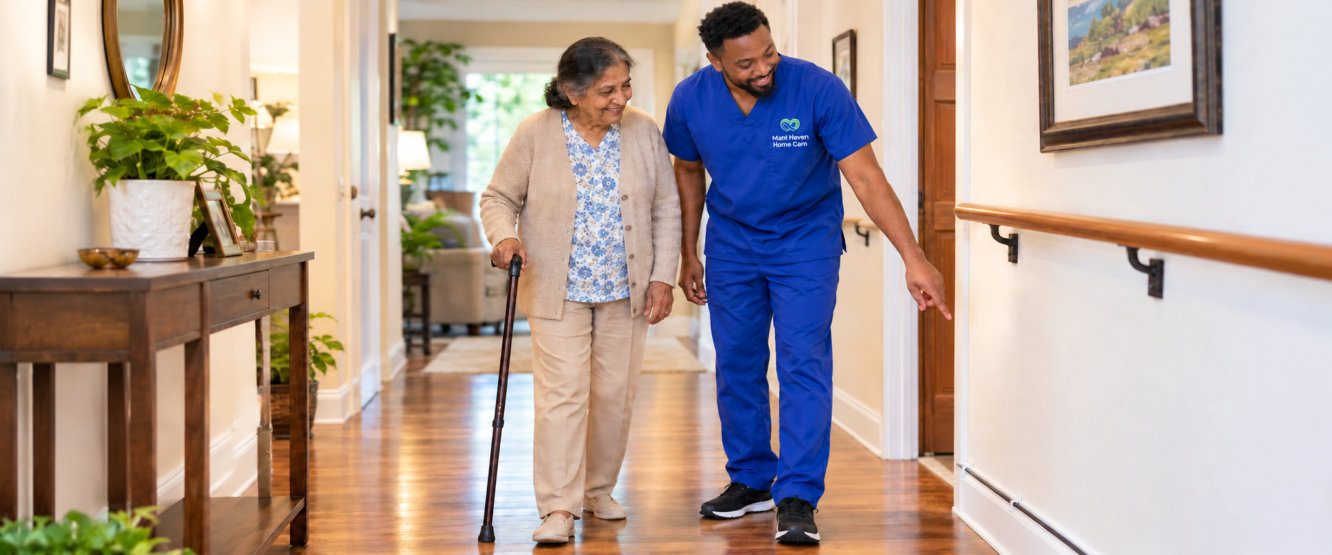
Small changes around the house can make everyday living safer and more comfortable. Walk through each room with your loved one and look for simple ways to reduce risks.
-
Clear walkways
Remove clutter, loose cords, and small items from hallways and main paths so moving around is easier and safer.
-
Secure rugs and floor surfaces
Loose rugs and slippery floors can cause trips. Use non-slip backing or remove rugs that tend to slide or curl.
-
Improve lighting
Bright, even lighting helps your loved one see clearly. Add night lights in hallways, bedrooms, and bathrooms for nighttime trips.
-
Make the bathroom safer
Non-slip mats and grab bars near the shower, tub, and toilet can help your loved one feel steadier and more confident.
-
Keep everyday items within reach
Store frequently used items at waist to shoulder height so your loved one doesn’t need to bend, stretch, or climb.
-
Check stairs and entryways
Sturdy handrails, clear steps, and good lighting at entrances make coming and going safer, especially in bad weather.
-
Test smoke and carbon monoxide alarms
Check that alarms work and batteries are fresh. Keep emergency numbers somewhere easy to see.
-
Organize medications
Keep medications in a clearly labeled, easy-to-find spot. A pill organizer can help keep daily routines on track.
Start Small, Then Build
You don’t have to fix everything at once. Begin with the areas your loved one uses most, like the bedroom, bathroom, and kitchen, and ask what feels hard or unsafe to them.
For emergencies, call 911. For ongoing safety or health concerns, talk with a healthcare professional.
How Mani Haven Can Help
We offer personal care, companionship, meals, light housekeeping, transportation assistance, and respite care shaped around each person’s daily routine.